


Welcome to the Carbide Processors Blog
How to extend the life of you cutting tools
Posted on Friday, August 9th, 2013 at 10:13 am.
The life of your cutting tools depends on the care and consideration you take with them. Checking and changing tool holders and collets when needed can drastically increase the life of your cutting tools. Many of the new CNC machines have the ability to automatically change the tool holders in the spindle as needed. Even if this process is automated, it is still important to check the tool holders for wear and replace them as needed to prevent premature cutting tool failure, poor cutting performance, or even expensive damage to the spindle.
There are four main parts to a tool holder (also called collet holder or collet chuck).
- Pull Stud– The pull stud screws into the top of the taper of the tool holder. The pull stud is held by the clamping set inside the spindle which pulls the holder up into the mouth of the spindle. A spring-loaded draw bar is used to pull the holder into place. Some Pull studs are hollow to allow coolant to flow through the tool holder.
- The Taper- the taper is the conical shaped area of the tool holder that goes into the spindle when changing the tool. An 8 degree taper automatically centers the tool into the spindle. The taper on all our tool holders is ground to a tolerance of .0002” for both the taper tolerance and the outside diameter tolerance. Our HSK tool holders have a shorter taper than our BT style.
- V-Flange- The V-Flange is usually identified as the “V” groove found on the outer most diameter of the tool holder. The automatic tool changer locks onto the V-Flange on the tool holder when moving the tool from the tool changer to the spindle and back. The cutouts in the flange help align and adjust the holder in the spindle.
- Collet Pocket- The collet pocket is the part of the tool holder where the collet is placed into before the collet nut secures it.
The cutting tool is held by the collet. The collet is designed to collapse around the shank of the cutting tool when pressure from the collet nut is applied. As the nut is tightened, the collet is tightened around the cutting tool, pushing it deeper into the collet pocket until maximum pressure is achieved. For a guide on how tight the collet should be, checkout our article on “How to get proper tightness for your collets.”
One of the first things to check on your tool holders is the spindle mouth. A worn spindle mouth (sometimes called bell mouthing) can cause runout issues that can affect the accuracy of the tool holder and can cause bad cut quality and reduce efficiency. You can see if bell mouthing is the cause of the issues by checking to see if the tool holder issues are eliminated by bench checking the TIR. If they are, then the problem is most likely a worn out spindle mouth.
Make sure the ATC IS properly aligned. If the ATC swing arm is not in alignment, then it will not insert the tool holder perfectly. This can cause damage to the spindle and tool holder, and reduce the life of your cutting tools.
Over time, the taper can become worn or damaged. You should check the taper for signs of wear, especially where the taper contacts the spindle mouth. Issues with the taper directly affect the accuracy of the machining. If there are any issues with the taper or if there is fretting, the tool holder must be replaced. Fretting occurs when two steel parts (like the tool holder and spindle mouth) are rubbing against one another. Fretting is caused by the tool holder taper and the spindle not being aligned perfectly and creating vibration and heat, which then develops into fretting. You can tell if there is fretting by the brownish, copper colored marks that are often mistaken for rust.
If a new tool holder is showing evidence of fretting, or if the tool holder is sticking in the spindle, this may indicate that the spindle needs to be reground. When the taper on a tool holder is worn, it can cause an out-of-round condition when the tool holder is inserted into the spindle called runout. Runout can be responsible for prematurely wearing out your cutting tools and can also cause a lot of vibration resulting in bad surface finish. The vibration caused from runout can also create heat build-up in the spindle and damage the spindle bearings.
Don’t forget your collets
Collets are made from a softer metal and have slots and cut outs that allow them to collapse and spring so that they grip the cutting tools tightly. The constant collapsing and springing to adjust and tightly grip the cutting tools caused the collets to wear out more quickly than the tool holder. Using a worn out collet can cause the tools and tool holders to prematurely fail. These tools and tool holders can be very expensive to replace. Changing the collets regularly and as needed can save thousands of dollars in tooling costs. Scoring marks on the inside diameter may indicate that the cutting tool was spinning inside the collet and are good indication that the collet needs to be replaced. You should also replace collets if they have any rust or pit. You should wipe down the tool holders and spray a light coating of rust preventative when they are not going to be used to help lengthen the life of the tool holder and collets. When it is time to use the tool holder again, be sure to wipe the oil off completely before placing it back in to the spindle. Using the correct coolant concentration can also help prevent rust on the collets and tool holders.
Portable Saw Mills- advantages of swing blade saw mills over band saw blade saw mills
Posted on Wednesday, August 7th, 2013 at 3:48 pm.
Swing blade portable sawmills are very popular and rightly so. There are extremely versatile, very rugged with a low operating cost.
Advantages of Swing blade Saw Mills:
1. Easy, fast sharpening
2. Increased yield – a swing blade mill lets you easily cut around bad sections. You can even get good lumber out of “worthless“ logs
3. Less turning of logs – you move the head instead of the log.
4. More Consistency in sizes – a solid, circular blade does not warp and move like a band saw blade does
5. Straighter Cuts – stiffer blade than a band
6. Inexpensive maintenance – typically 15,000 board feet per blade
7. Easy to water cool – for longer blade life and no burning
A great many of these advantages are due to the fact that a circular saw blade is inherently much more rugged, long-lasting, durable and much harder to damage than a bandsaw blade. By its very design a bandsaw blade has to be flimsy enough to bend without breaking. A circular saw blade is designed to be strong, rugged and stiff.
The stiffness of the circular saw blade in a swing blade sawmill means much better cuts with no saw wander.
However, you need good saw blades to achieve these advantages. The popular tools replacement saw blades for Lucas Mills portable saws are not just a big version of a cheap skill saw blade.
Brand X Sawmill
Peterson Portable Sawmills
D & L Swing Blade
Bestbier Best saw Mills
Popular Tools saw blades for swing saw mills use a special steel that is strong enough to cut straight and tough enough to handle most knots, nails and other foreign objects.
The carbide saw teeth on a popular tools blade are a special grade of sub-micron carbide designed to give long life between sharpenings while being tough enough to survive cutting in most extreme situations.
The carbide teeth on a Popular Tools swing blade mill are very easy to sharpen and easy to replace with a standard torch set up.
For longer life out of your tool holders, think small…
Posted on Monday, August 5th, 2013 at 11:32 am.
For Safety and lengthening the life of your tool holders, think small…

Collet nuts may seem like a small thing, but they play a big role in keeping the tool holder accurate and balanced while machining. Many manufacturers use bearing nuts with their collets. The bearing nuts can be difficult to keep balanced and more prone to seizure if the seal fails because of all the moving parts (nut, bearing race, bearings). Power Coat collet nuts are balanced and provide 75% more holding power on the tool shank, which can make them a better option as they provide increased accuracy and rigidity. This increased rigidity and accuracy are especially important when machining side loads. Using power Coat Collet nuts can also increase cutting tool life significantly.
Pull studs, or retention knobs, are another small but crucial safety component. The pull stud, or retention knobs, maintain the connection between the spindle and tool holder. If that connection fails, the tool holder will dangerously fly out of the spindle. It is important to check the pull studs regularly for signs of wear, cracks or other damages to ensure that the toolholder safely stays in the spindle.
Keeping your tool holders, collet pocket, collet, and nut clean and properly maintained can go a long way in reducing premature wear of the tool holder and cutting tools. These components are manufactured to perform within tolerances of .0001”. When working with tolerances that tight, dust, dirt, oil, chips and other contaminants left on the spindle, taper, flange, collet and collet pocket or nut can cause runout and premature wear of the cutting tool, tool holder and spindle mouth. Taking a few extra precautions and checking your CNC tooling parts can go a long way in keeping you and your expensive CNC Tooling parts safe.
How to reduce chipping and get cleaner cuts
Posted on Wednesday, July 31st, 2013 at 3:45 pm.
Using a main blade and matching scoring blade can reduce the chipping and give you cleaner cuts.
Chipping of material can be a real problem and can ruin a woodworking project. Using a scoring blade along with your main blade can greatly reduce the chipping that can occur at the bottom of the cut.
To most effectively reduce the chipping, use a scoring blade held in precise alignment with the main blade and turning in opposite directions. The lower surface is scored by the smaller scoring blade before the main blade completes the cut. The outer surface of the material has already been scored and will not chip when the main blades makes the final cut.
When it comes time to sharpen your blades, it’s important to keep in mind that the scoring blades should only be sharpened on the face of the blade so that it can maintain the same kerf. The scoring blade must cut a kerf of the same width as the main blade. With each sharpening the main blade becomes shorter and narrower. In order to maintain that the scoring blade and main blade keep the same kerf, the scoring saw kerf must be altered.
Conic scoring saws solve this dilemma by adjusting the depth of the cut. The conic scoring blades have conic shaped teeth that make a v-like cut in to the wood, so the deeper the cut, the wider the cut. Before the main blade is sharpened, the conic scoring blades must cut deep to match the wider kerf of the main blade. As the main blade gets sharpened and the kerf becomes narrower, the conic scoring blade must make shallower cuts so that the width of the cut is narrower.
With split scoring saws, it is also imperative that the scoring saws cut the same kerf as the main blade, but they accomplish this a different way. With Split scoring saws, spacers are used to control the kerf of the scoring cut. As the kerf of the main blade becomes narrower with repeated sharpening, spacers (or shims) are removed from the split scoring saw so that it matches the width of the main saw.
Popular Tools makes high quality scoring blades for a wide range of various machines and in a wide range of widths or kerfs. Their choice to use thick, advanced grades of carbide ensure that your scoring blade, as well as your main blade, will have a very long tool life and will yield clean cuts every time.
How to get the most life from your Oscillating blades
Posted on Tuesday, July 30th, 2013 at 9:48 am.
Even the best tool can wear out quickly if it is not used properly. Imperial blades prides themselves on producing some of the highest quality, American made Oscillating blades, and we agree. Not using the correct techniques can prevent you from getting the full life that these tools can offer.
Imperial Blades oscillating blades are made to fit just about any oscillating tool with their universal arbor design and can be used for a great number of applications including wood, fiberglass, drywall, plastic, metal cutting, and more. If you have ever seen the video of Imperial Blades zip through nail after nail while blades from Rockwell, Fein, and Bosch struggle through a few nails before finally wearing out, then you know just how good Imperial Blades really are. Imperial Blades are by far a cut above the rest, and using them the correct way can help you get even longer life and better cuts.
[youtube]http://youtu.be/I5mUGFY48wo[/youtube]
With most power tools, material is either pulled out of the hole, or thrown out of the cut. With an oscillating tool, the material and chips have a tendency to get packed into the cut due to the rapid, short strokes. Having the material packed into the cut restricts the blades movement and cutting action and creates more vibration. It also increases friction, which increases heat. These things slow down the cutting speed and decreases the life of the blade.
To get longer life from your oscillating tools, you need to apply just enough pressure to engage the teeth into the work surface. Once you begin to create sawdust or chips, you need to move the blade back and forth in rocking motion. This allows the chips to exit the cut instead of getting packed into the cut, reducing friction and heat and increasing the blade life. The back and forth movement also increases the surface that you are trying to cut with so that the blade does not wear in just one small area.
When plunge cutting, you need to rock the blade slightly and move the blade up and down in the cut. The rocking allows the chips to come out of the cut and the up-down movement of the blade allows the blade to breath and prevents it from getting too hot. By using these techniques, you will actually be able to make faster cuts with less heat buildup in the blade.
If you use the proper techniques when cutting with your oscillating blades then you should notice longer tool life, smoother cuts and less heat and vibration.
Some Exciting Things are Happening…
Posted on Tuesday, July 23rd, 2013 at 2:00 pm.
The AWFS, Exciting new tools, and some small changes that will make finding the right tool even easier…
We are in the process of adding some really unique new hand tools. These New tools are High quality, German made tools comparible to Wiha quality, but with more innovative and versatile functions. We are very excited to be able to add these to our product line. Check back soon to see when these will be available. Here is a sneak peak at one of the new products we will be adding:
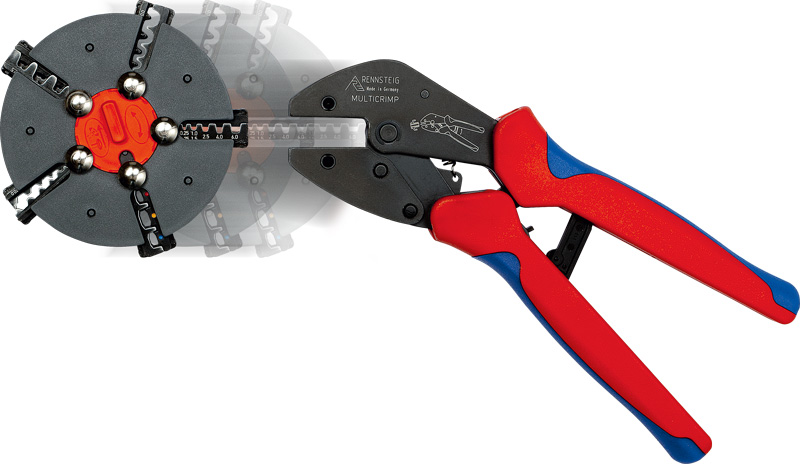
This crimp tool is specially designed for 5 different application areas. The tool has a quick change system for up to 5 different Die Sets. The excellent handling, easy exchange of the crimping insert bits are facts in favor of these crimping pliers.
Made in Germany
I’ll also be announcing updates about these new tools in our next newsletter and on our Facebook page. If you haven’t already, like us on Facebook to get updates and to hear about special promotions.
We are also making some small changes to our website that should make finding the right tool even easier. Soon you will be able to narrow your product search by specific attributes of the tool you are looking for. I’ll have an update about when this new search feature launches soon.
Last but not least… The AWFS!
We are very excited to be attending the AWFS this year in Vegas. Our main goal… To bring you more choices for quality hand tools and woodworking tools. We are excited to see what kind of new and unique tools we can find and see about bringing on some new product lines. Are there any new product lines or tools that you would like to be able to shop for on our site? Let us know. We love to hear your feedback.
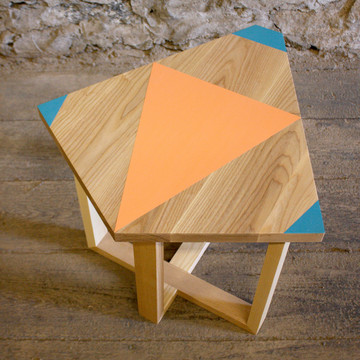
Really Cool 6 piece Table
Posted on Tuesday, July 23rd, 2013 at 10:49 am.
Here’s a fun woodworking project. Really neat idea for a table. You could put your own spin on it and create a puzzle table if your feeling a little more creative.

Lucas Saw Mill blades
Posted on Tuesday, July 23rd, 2013 at 10:12 am.
Save on Lucas Saw Mill Replacement Blades
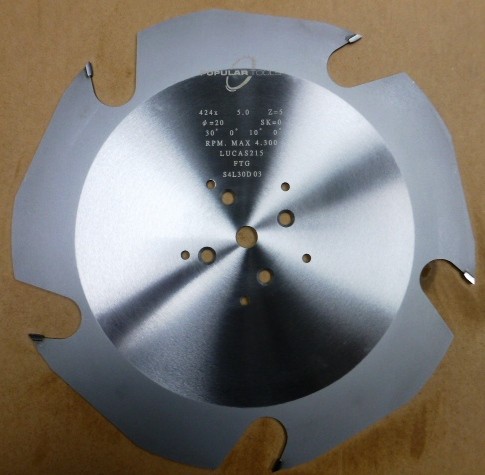 Lucas Mill, manufacturers of the Lucas Mill Portable Saw mill provides high quality portable saw mills and at reasonable prices, making it even easier for anyone to own their very own saw mill. In March of 1994, Lucas Saw Mill started developing timber milling machines that would be simple to operate, highest quality, and versatile so that it could be used in any environment.
Lucas Saw mills have proven to be reliable, durable, and versatile for owner builders and contract timber millers, whether they are milling in the extreme frigid climates of Alaska, or the humid warm climates of the Pacific Islands.
Lucas Mills had a humble start in 1994 in a farm shed. They received over 50 orders in their first month of production and demand for Lucas Portable Sawmills continued to grow steadily over the years. They now have sold over 13,500 machines in over 100 countries around the world.
The Lucas Saw mills have been recognized for their achievements through numerous awards, including awards for business excellence and manufacturing innovativeness and many more. In the 2003 Great Portable Saw mill Shootout the Lucas Portable Saw mill beat all 12 competitors for achieving the highest board feet per hour at 922BF/HR with zero miss-cuts and zero time out.
Popular Tools manufactures high quality replacement blades for the Lucas Saw Mills. Save on Popular Tools Replacement blades for Lucas Saw Mill by shopping with us.
Choosing the right wood species for your woodworking project
Posted on Tuesday, July 16th, 2013 at 2:08 pm.
Species surface hardness
When working with various woods, there is always the consideration whether we can substitute a less expensive wood for the species we are using and still get the same performance. When looking at a potential substitute, cost, availability, color and density can certainly be important factors.
The importance of density
Density is very important because this property is related closely to strength, stiffness and nail, screw and staple holding power. We can often offset low-density effects. If the strength is low, we can perhaps make the piece a little larger. If the fastener holding power is low, we can increase the fastener size or number of fasteners to achieve the required performance.
One additional variable that is hard to compensate for by changing the design or manufacturing process is surface hardness. A low hardness, or softer woods, means that the surface is easy to dent; a dent can damage the wood fibers and give a brittle finishing coating. Crushed fibers can often be restored by steaming the damaged area briefly, finish repair is much more difficult. Softer woods, although they machine easier, are also harder to sand to a smooth, fuzz-less surface.
Comparing hardness
Surface hardness in the wood industry is measured by the load or force required to embed a steel ball, 0.444 inch in diameter, to a depth of one-half its diameter. The hardness of end grain is different from the two surfaces.
Special note: Soft maple, a lumber trade name, includes both red and silver maple. Note the difference in hardness between the two species that make this grouping. Also note the large differences between the pine, spruce and oak species. ^
Wood density or hardness also varies by location grown. Typically wood grown in a warmer climate with a longer growing season will be softer. Wood grown in a cooler climate with a shorter growing season will be harder. Condition of the soil and rainfall also influence the condition of the wood. Many tropical woods, for example, are described as being “full of sand” because of the high mineral content.
Tip: Cutting hard woods or woods with a higher acidic composition can cause your cutting tools to get dull more quickly. Try using a cermet tipped blade in place of carbide tipped blades to increase service life and bet better cuts.
How to make a Serviceable Level
Posted on Wednesday, July 10th, 2013 at 4:14 pm.
How to make a Serviceable Level- taken from the book: Handy Farm Devices and How to Make Them, by Rolfe Coblei 1909
Take two 1-inch boards of rather hard wood, well‑seasoned, 2 to 3 feet long, bolt or screw them together at right angles. This union must be so strong as never to be moved by ordinary pressure.
At the top of the perpendicular piece cut a slit and insert a piece of strong thread.
To the bottom of the thread tie a thin circular weight.
Lay the device across two trestles of nearly the same level.
Just above the weight mark the place where the string hangs.
Reverse the position of the instrument by turning it end for end, and again mark the position of the string.
Half way between the two marks place a third mark.
When the string hangs over this mark the lower board will be level.
You can put a nail on each side of the string, just above the weight, to keep it from swinging far out of place. It must be allowed to swing freely.
A simple level may be improvised by Filling a small flat bottle with water, so that only a bubble of air remains, and attaching it lengthwise and near the middle of a straight stick or narrow board.
For more articles or for deals on quality tools, please visit our website. Get huge savings on Whiteside, Woodpeckers, Wiha, Bondhus and more.
